




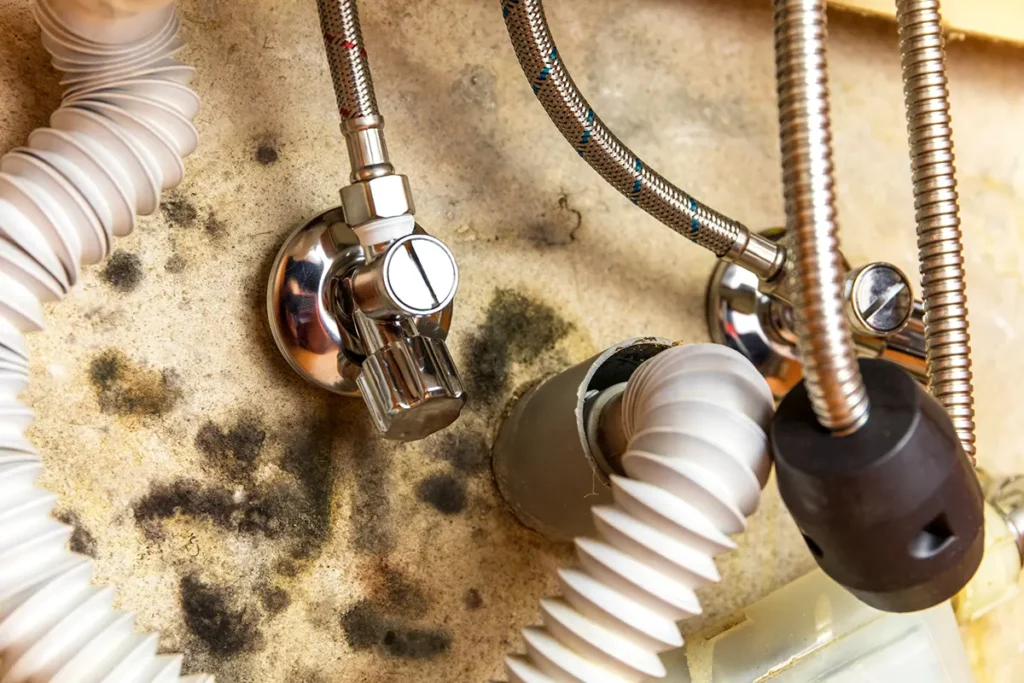
Homeowners insurance usually covers mold only when it results from a sudden, accidental event the policy already covers, such as a burst pipe, a ruptured water heater or a failed washing machine hose. Mold from a slow leak, long-term humidity, poor maintenance or flooding is usually excluded. Even when mold is covered, many policies cap it with a separate, lower limit.
The mold itself is rarely what decides the claim. The cause of the water is, along with how quickly it was found and handled. And in Illinois, the exact wording of your policy matters more than the general rule, because an Illinois appeals court has upheld a mold exclusion even where the water came from a sudden break. That is why the paperwork from mold remediation matters almost as much as the cleanup itself.
The Short Answer: When Mold Is Usually Covered, and When It Isn’t
Usually covered, if your policy does not exclude mold outright:
- A pipe that bursts or freezes and splits.
- A water heater that ruptures; prompt water heater leak cleanup is what keeps that from becoming a mold claim.
- A washing machine hose, dishwasher or ice maker supply line that fails.
- Water used to put out a covered fire.
Usually not covered:
- A slow drip under a sink or behind a wall that went on for weeks.
- Humidity, condensation or poor ventilation.
- Flooding or groundwater, unless you carry separate flood insurance.
- A sewer or sump pump backup, unless you added backup coverage.
- A leak you knew about and did not repair.
These are tendencies, not promises. Two insurers can treat the same loss differently, and the answer lives in your policy, not in a general rule.
The Two Clocks Behind Every Mold Claim
When an adjuster looks at mold, they are really asking about two stretches of time.
Clock one: how long the water was escaping before anyone knew
Many policies exclude damage from “continuous or repeated seepage or leakage of water or steam” that occurs “over a period of weeks, months or years.” Older versions used a fixed 14-day line. That is why a sudden pipe break and a pinhole leak that dripped into a wall cavity all winter can produce identical-looking mold and completely different claim decisions. Mold that is well established, with stained and rotted materials, tells the adjuster the first clock ran a long time. A slow, hidden leak often announces itself as a smell before anything is visible; here is why a basement smells musty and what that usually means.
Clock two: how long the water sat after you found it
Homeowners policies generally require you to protect the property from further damage once you discover a loss. In practice, that means stopping the water and starting to dry. The EPA notes that in most cases mold will not grow if wet materials are dried within 24 to 48 hours. Mold that appears weeks after a covered leak was found, because nobody dried the wall, is the kind of damage an insurer can argue was preventable.
Most mold claims that get denied run long on one of these clocks. Most that get paid were short on both.
Illinois Policies: Read the Mold Wording, Not the Brochure
In DeVore v. American Family Mutual Insurance Co. (Illinois Appellate Court, 2008), a Lake County family was on vacation when the shut-off valve feeding their washing machine ruptured. Water spread through the laundry room, kitchen, living areas and basement, and mold followed. The policy excluded loss caused by mold “regardless of any other cause or event contributing concurrently or in any sequence to the loss.” The court held that the exclusion was clear and that the mold damage was not covered, even though the water event was sudden.
Illinois does set some ground rules. In Company Bulletin 2002-07, the Illinois Department of Insurance told insurers that mold exclusions must still cover mold that results from a covered fire or lightning loss, and that removing or limiting mold coverage requires a separate, detailed and noticeable written notice to the policyholder. To check your own policy:
- Look in the exclusions for the words “mold,” “fungi” and “wet or dry rot.”
- Check the declarations page and endorsements for a separate mold or fungi limit.
- Look back through renewal paperwork for a notice that changed or limited mold coverage.
- Ask your agent, in writing, whether you have water backup or hidden water damage coverage.
Flood, Sewer Backup and Sump Pump Mold
Standard homeowners policies exclude flooding, so mold after a flood depends on flood insurance. The National Flood Insurance Program excludes mold that is within the policyholder’s control, including a failure to inspect and maintain the property after the flood recedes. FEMA’s appeal decisions note that mold may be covered when the flooding kept the policyholder from getting into the home to prevent it.
Backups are separate again. Mold from a sewer backup or a failed sump pump is generally covered only if you added a water backup endorsement. If your basement relies on a sump, it helps to know what causes sump pump failure and to check your flooded basement coverage before spring.
What Mold Remediation and Removal Claims Usually Pay For
Insurers and contractors use “mold remediation” and “mold removal” almost interchangeably, but the work is broader than removal. Under the IICRC S520 standard, remediation means containing the area, removing contaminated materials that cannot be cleaned, cleaning what can be saved and verifying the result. When a claim is approved, it typically pays for that work on the damage the covered event caused, up to the policy’s mold limit, and for repairing the materials removed. That repair is a separate phase, which is the difference between remediation and restoration.
A mold claim usually does not pay to fix the underlying maintenance problem, such as a roof or window that leaked for a season, or to remove mold that predates the covered event. If the claim pays only part of the job, or none of it, it helps to know what mold remediation typically costs in Cook County before you get estimates.
Is a Mold Claim Worth Filing?
Three questions usually settle it. First, was the water sudden and accidental, or did it build up over time? If it was gradual, the claim faces the seepage exclusion before anyone looks at the mold. Second, does your policy exclude mold, or cap it with a separate limit? Third, how does a written estimate for the work compare with your deductible and that limit? If the job costs little more than the deductible, or far more than the mold limit, the claim may not change much. Get the estimate and read the policy before you decide.
How We Document a Mold Claim and Work With Your Adjuster
We are a restoration company, not your insurer or your attorney, and your policy wording is what controls. What we can do is make sure the facts an adjuster needs are on paper before anything is torn out:
- The source. Where the water came from, and evidence of whether it was sudden or long-running.
- The scope. Moisture readings and thermal images showing which materials are wet or affected, beyond what is visible.
- Before photos. Every affected area photographed before demolition, so the adjuster can see what we saw.
- The plan. A written scope that follows IICRC S520, with the reasons each material is cleaned or removed.
- Drying records. Daily readings showing the structure was brought back to dry.
Keep damaged materials and belongings until the adjuster says you can discard them, and know what gets thrown away after mold remediation so nothing leaves the house undocumented. Save every receipt.
Illinois sets timelines for the insurer, too. Illinois rules (50 Ill. Adm. Code 919.40) treat 21 working days after notice of a loss as the benchmark for a prompt investigation, and 15 working days as the limit for replying to your communications. Under 919.50, if a first-party claim is denied or paid for less than you claimed, the insurer must explain why in writing within 30 days after it finishes its investigation and decision.
One more Illinois note: the Mold Remediation Registration Act will require mold remediators to register with the Illinois Department of Public Health, but IDPH says registration is not in effect until its pending rules are adopted. Until then, ask any company for proof of third-party certification such as IICRC.
Frequently Asked Questions
Does homeowners insurance cover black mold?
The color or species of mold does not change coverage. What matters is the cause of the moisture and whether your policy excludes or limits mold. Black mold from a sudden pipe break is treated like any other mold from that break.
Does homeowners insurance cover mold from a leak?
Often, if the leak was sudden and accidental and your policy does not exclude mold. Mold from a slow leak that went on for weeks is usually excluded as seepage, and mold from a leak you found but did not dry may be treated as preventable.
Should I call my insurance company or a mold remediation company first?
Do both quickly. Stop the water, photograph everything, and report the loss promptly. A remediation company can start drying and documenting the same day, which protects both the house and the claim.
Does insurance cover mold after a flood?
Not under a standard homeowners policy. Flood insurance through the NFIP may cover mold caused by flooding, but it excludes mold that resulted from failing to inspect and maintain the home after the water receded.
Who handles mold remediation and insurance documentation near Elk Grove Village?
We are ProTech Restoration, based in Elk Grove Village, and we have served Chicagoland for more than 20 years. Our IICRC-certified technicians find the moisture source, remove what cannot be saved and document the work for your adjuster. The same crews handle mold remediation in Arlington Heights, Schaumburg, Des Plaines and nearby suburbs.
Get the Cause Documented Before the Claim Is Decided
If the mold came from humidity or a slow leak, a claim is unlikely to pay, and we will tell you that. The better use of your money is fixing the moisture and doing the remediation properly. If it followed a sudden water event, the next few days of documentation can decide the claim. You don’t have to deal with the insurance company alone: a dedicated project manager stays with you from the first call through the final walkthrough, and we work directly with your adjuster. There is no minimum charge.
To have the source and scope documented, contact our team for a free assessment.