




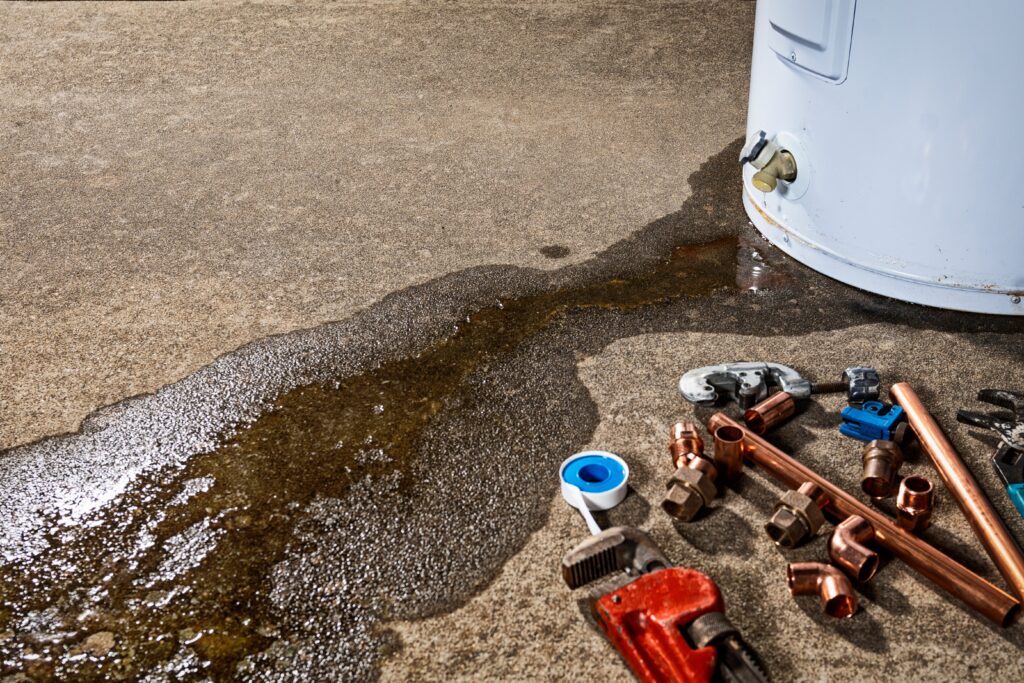
Water freezes at 32°F, but pipes inside a heated house rarely freeze at that temperature. Field research by the University of Illinois Building Research Council found that unprotected pipes in an unheated space began to freeze once the outdoor temperature fell to 20°F or below. Pipes in unheated basements, crawl spaces, garages and exterior walls go first, and wind or a cold snap that lasts several days raises the risk.
That 20°F figure is a warning line, not a guarantee. A pipe that sits in moving cold air can freeze above it, and a well-insulated line in a heated room can ride out much colder nights. In Elk Grove Village the line gets crossed often, and when a pipe does freeze and split, the water usually arrives later, when the ice melts. That is why frozen and burst pipe repair in Elk Grove Village has two parts: a plumber fixes the pipe, and the house has to be dried.
The Short Answer: Three Temperatures That Matter
- 32°F: the temperature at which water turns to ice. A pipe freezes at this point only when the pipe itself sits in air that cold, such as an outdoor hose bib or a line in an unheated garage.
- 20°F and below outside: the temperature alert threshold from the Building Research Council’s field tests on uninsulated pipes in an unheated attic. This is where frozen pipes start showing up in ordinary homes.
- The teens and below, for days at a time: the same research surveyed plumbers, who reported burst pipe problems beginning once temperatures fell into the teens. The longer the cold holds, the further it works into the building, reaching pipes that are fine on a single cold night.
Two houses on the same street can have very different winters. The difference is rarely the thermometer. It is where the pipes run, how much cold air reaches them, and how long the cold lasts.
Why the Outdoor Temperature Is Only Part of the Answer
Where the pipe runs
The American Red Cross lists the pipes most likely to freeze: outdoor hose bibs and sprinkler lines, supply pipes in unheated areas like basements, crawl spaces, attics and garages, kitchen and bathroom cabinet plumbing, and pipes along exterior walls with little or no insulation. A pipe on the warm side of the insulation is protected. A pipe on the cold side is not, even if it sits a foot from a heated room.
Wind and air leaks
Moving air pulls heat away far faster than still air. The research behind the 20°F threshold warns that pipes exposed to cold air, especially wind, can freeze above it. A gap around a dryer vent, a hose bib or a rim joist can aim a draft straight at a supply line.
How long the cold lasts
A single night at 15°F may do nothing. Several days in a row near that number give the cold time to soak through walls and floors and into cabinets. Watch the forecast for duration, not just for the low.
The thermostat
The Red Cross recommends keeping the thermostat at the same temperature day and night during very cold weather, and not setting it below 55°F if you will be away. A deep overnight setback lets exterior walls and cabinets cool at the coldest hour.
When Do Pipes Freeze in Elk Grove Village?
Elk Grove Village sits right next to O’Hare, where the National Weather Service keeps Chicago’s official records. Under the 1991-2020 climate normals, the average January low at O’Hare is 18.8°F, already below the 20°F alert line. January averages 28.1 nights at or below freezing and 3.5 nights at or below zero. December and February lows average 24.4°F and 21.8°F, so the risk season runs from the first hard cold in December into early March.
The housing stock adds to it. Much of Elk Grove Village was built between the 1950s and the 1970s, and homes of that age can carry plumbing through crawl spaces, garages, additions and exterior walls that were never meant to be heated. January and February are the months we see burst pipes and ice dam water damage together, often in the same week, and both end in the same place: water damage restoration in Elk Grove Village that starts with finding every wet material.
What Happens When Pipes Freeze: The Pipe Breaks Where the Ice Isn’t
Most people picture ice swelling until it cracks the pipe. That is not quite what happens. In a 1996 study, the University of Illinois Building Research Council showed that the damage comes from water pressure. Here is the sequence:
- An ice plug forms at the coldest point in the line, usually where the pipe passes an outside wall or a draft.
- The ice keeps growing and pushes the remaining water toward the nearest closed faucet.
- Pressure builds in that trapped stretch of water between the ice and the faucet, because the water has nowhere to go.
- The pipe splits there, usually at a spot with little or no ice. Water on the other side of the plug can flow back toward the street, so that side rarely bursts.
This explains three things homeowners find confusing. The crack is often not where the frost was. Nothing leaks while the line is frozen, because the ice plugs it. And the water usually appears on the thaw, sometimes hours later, sometimes while nobody is home.
It also explains why a dripping faucet helps. A slight drip does not stop ice from forming. It gives the pressure an exit, so the pipe is far less likely to split even if the water inside it freezes. The Red Cross advises letting cold water drip from faucets served by exposed pipes when it is very cold.
Signs a pipe has already frozen include a faucet that produces only a trickle, frost on an exposed section of pipe, or one fixture with no water while the rest of the house is normal. If one pipe freezes, the Red Cross notes, others may too.
If a Pipe Freezes: Safety First, Then the Shutoff
Before anything else, find your main water shutoff and make sure it turns. If the line has split, the leak begins the moment the ice melts, and the shutoff is what limits the damage. The Red Cross advises keeping the faucet open while the pipe thaws, using only safe heat such as an electric heating pad or hair dryer, and never using a blowtorch, propane heater or any other open flame. If you cannot find the frozen section, or it will not thaw, call a licensed plumber.
What a Burst Pipe Does to a House
A supply line keeps feeding water until someone shuts it off. That water runs along floor joists, soaks into drywall from the bottom up, wicks into insulation and settles under flooring and in wall cavities. Supply water starts out clean, which the IICRC S500 standard classifies as Category 1, but once it soaks through building materials and sits, it does not stay that way.
The clock matters. The EPA advises drying wet materials within 24 to 48 hours to prevent mold growth in most cases, and porous materials like wood and drywall go quickly once growth starts; see how quickly mold spreads on wood. Proper burst pipe cleanup means extracting standing water, checking behind walls and under floors with moisture meters and thermal imaging, removing what cannot be dried, and drying the structure until the readings confirm it. For scale, here is what counts as major water damage.
Frozen Pipes and Your Homeowners Policy
Policies treat frozen pipes differently depending on whether you were living in the house. The standard ISO homeowners form (HO 00 03) excludes freezing damage while the home is vacant or unoccupied, with one important condition. The exclusion “does not apply if you have used reasonable care to: a. Maintain heat in the building; or b. Shut off the water supply and drain systems and appliances of water.”
In plain terms: if you leave for a winter trip, keep the heat on, or shut off the water and drain the lines. Your own policy may word this differently, so read the freezing section before you go. For how sudden water damage is usually treated compared with flooding and seepage, see our guide to homeowners insurance and water damage.
Frequently Asked Questions
Will pipes freeze at 32 degrees?
Only if the pipe itself is exposed to air that cold, like an outdoor spigot or a line in an unheated garage. Pipes inside the heated envelope of a house usually need much colder outdoor temperatures, around 20°F or below, before they freeze.
Should I let my faucets drip when it’s cold?
Yes, on faucets served by pipes in exterior walls, cabinets or unheated spaces. The drip relieves pressure between the ice and the faucet, which is what bursts pipes. A slight, steady drip is enough.
What temperature should I keep my house to prevent frozen pipes?
Keep it steady day and night during a cold snap. If you are away, the Red Cross recommends setting the heat no lower than 55°F. Open cabinet doors on exterior walls so warm air reaches the plumbing.
Will a frozen pipe always burst?
No. Bursting happens when pressure builds between the ice and a closed faucet, so a line with an open faucet has a release path. Still, watch every section of the line as it thaws, because a crack may only show once water is moving again.
Who handles burst pipe water damage near Elk Grove Village?
We are ProTech Restoration, based in Elk Grove Village, and we have served Chicagoland for more than 20 years. Our IICRC-certified technicians extract the water, find what is wet behind walls and floors, and dry the structure, and we answer 24/7. The same crews handle water damage restoration in Arlington Heights, Schaumburg, Des Plaines and the surrounding suburbs.
A Thawed Pipe That Doesn’t Leak Doesn’t Need Us
If a line freezes, thaws and holds, you may only need a plumber to look at why it froze. That is the honest answer. If it splits, the plumbing repair is the quick part. The water already in your walls, floors and insulation is what turns into a mold problem if it is not dried properly. A dedicated project manager stays with you from the first call through the final walkthrough, we work directly with your insurance adjuster, and there is no minimum charge.
If a burst pipe has soaked part of your home, contact our team and we will walk you through what needs to be dried and documented.