




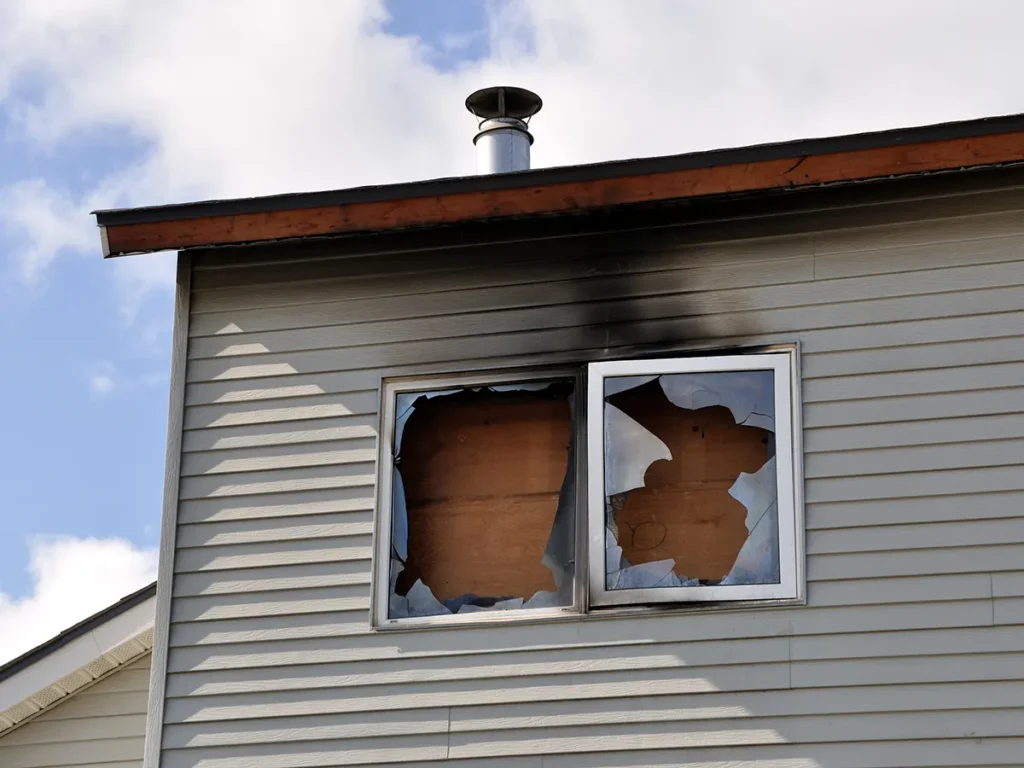
After a house fire, the first steps are to stay out until the fire department says the home is safe, contact your insurance company, get the fire incident report, and secure the property against weather and entry. Then document everything before anything is cleaned or thrown away. In that order, each step protects the next one.
What you do not do in those first days matters just as much. Turning the utilities back on, running the furnace, wiping soot or hauling damaged belongings to the curb can all make the damage worse or weaken the claim. Professional fire and smoke damage restoration can wait a day for the adjuster. Safety and documentation cannot.
What To Do After a House Fire: A Checklist for the First Days
- Stay out until you are cleared. The U.S. Fire Administration says not to enter a damaged home unless the fire department says it is safe. If a building inspector posts a sign, the Red Cross advises not entering until you get more information.
- Retrieve essentials only with permission. Ask the fire officer whether someone can escort you in for medication, eyeglasses, phones, wallets and important papers.
- Find a safe place to stay. Disaster relief groups such as the American Red Cross can help with food, clothing, medicine and a place to stay. Lean on family and friends, and give yourself room to process what happened.
- Call your insurance company right away and ask what to do first. Ask about an advance for living expenses.
- Get the fire incident report number before the crews leave, if you can.
- Secure the property. Boarding up windows and doors and tarping the roof keeps out weather and intruders. If the home will be empty, the USFA suggests letting the police know.
- Tell your mortgage company or landlord about the fire.
- Photograph everything, inside and out, before anything is moved.
- Save every receipt for money you spend because of the fire.
What Not To Do After a House Fire
- Don’t turn the utilities back on yourself. The USFA notes the fire department will make sure water, electricity and gas are safe to use and says not to restore them on your own. If you smell gas, leave and get well away from the house.
- Don’t run the furnace or air conditioning until the system has been checked. We recommend this because a running blower pulls smoke residue into the ductwork and pushes it into rooms the fire never reached.
- Don’t wipe or scrub soot. Dry soot, oily soot and protein residue each need a different cleaning method, and the wrong one can smear residue deeper into paint, drywall and fabric. The adjuster also needs to see the damage as it is.
- Don’t throw away damaged items until an inventory has been taken, as the Red Cross advises.
- Don’t eat or use food, drinks or medicine that were exposed to heat, smoke or soot. The Red Cross says to throw them away.
- Don’t sign the first contract handed to you at the curb. Illinois gives you specific protections; more on that below.
Getting the Fire Report
Your insurer will likely ask for the fire department’s incident report, which records the date, time and what crews found. Write down the incident number at the scene if you can, and ask the responding department for its process to request a copy. Keep the names of the fire officer or investigator, too. The USFA’s recovery checklist includes a space for both. Having the report ready means one less thing holding up the start of the claim.
What To Do After a House Fire for the Insurance Claim
Report the claim and ask about living expenses.
Most homeowners policies include coverage for additional living expenses, sometimes called loss of use, while the home is unlivable. Ask how it works, what it covers, and whether an advance is available. If you receive one, keep a detailed record and every receipt.
Build the inventory before anything leaves.
Go room by room. Photograph each space and the contents of closets, drawers and cabinets, then list items with approximate age and value. Bank and card statements, online order histories and old photos help fill gaps. Disposing of items too soon could affect your claim, so check with your insurer before anything is hauled away.
Replace documents and handle damaged money.
Make a list of documents to replace, such as driver’s licenses, passports, birth certificates, Social Security cards, insurance policies and property records. For burnt cash, the USFA advises handling it as little as possible and wrapping each bill or piece of a bill in plastic. Badly damaged U.S. currency can be submitted for exchange to the Bureau of Engraving and Printing.
Protect the property from further damage.
Policies generally expect you to take reasonable steps to prevent further loss, which is why board-up and roof tarping happen early. A fire is also a water loss. The water used to put it out soaks drywall, insulation and flooring, and it needs the same drying as any other water damage restoration in Elk Grove Village. The Illinois Department of Insurance has told insurers that mold exclusions must still cover mold resulting from a covered fire loss.
Review the estimate before you sign.
When the insurer’s estimate arrives, compare it line by line with your restorer’s written scope. A missed room, a ceiling left off or contents not counted is far easier to correct before you accept payment than after. Ask questions in writing and keep copies.
Know the Illinois claim timelines.
Illinois rules (50 Ill. Adm. Code 919.40) treat 21 working days after notice of a loss as the benchmark for a prompt investigation and 15 working days as the limit for replying to your communications. Under 919.50, if your claim is denied or paid for less than you claimed, the insurer must explain why in writing within 30 days after completing its investigation and decision.
If a public adjuster approaches you
Public adjusters are licensed professionals who represent the homeowner, for a fee, in negotiating the claim. Some families find them helpful. Illinois law sets rules for how they approach you. Under 215 ILCS 5/1590, a public adjuster may not offer to represent you while the fire department is still working at the property or between 7 p.m. and 8 a.m. Under 215 ILCS 5/1575, a public adjuster contract is voidable for 5 business days after your insurer receives it, and the adjuster must give you written disclosures about the claim process and your rights. Read the fee terms before you sign anything.
Why Smoke Damage Reaches Rooms the Fire Never Touched
Fire stays in one place. Smoke does not. Heat pushes smoke through the house, into closets, attic space, wall cavities and ductwork, and the residue settles on surfaces far from the fire room. That is why smoke damage is often the larger part of the job and why the odor can linger after the visible soot is gone. The residue also carries health concerns worth understanding; see what is toxic after a house fire.
In 2025, the IICRC published ANSI/IICRC S700, the first American National Standard for professional fire and smoke damage restoration. It covers assessing what residue is present and how heavy it is, where the affected area ends, the HVAC system, and contents. Ask any restoration company whether its assessment follows S700. Odor removal should target the source through cleaning, HEPA air scrubbing and deodorization, rather than covering the smell with fragrance. Belongings that can be saved, from clothing to electronics to documents, usually go through professional contents cleaning rather than a wash at home.
Rebuilding After a Fire in Elk Grove Village
Reconstruction permits in the village go through Elk Grove Village Community Development at 901 Wellington Avenue, which requires electronic submittal. Plan for permit review in the schedule. If the family will be out of the house for months, ask about pack-out: moving salvageable belongings to cleaning and climate-controlled storage so they are not sitting in a damaged house during the rebuild.
Much of Elk Grove Village was built between the 1950s and the 1970s, and opening fire-damaged walls in those homes often reveals aluminum branch wiring, undersized electrical panels or original ductwork. Bringing those up to current code can add work that was not in the first estimate. Ask your agent whether your policy includes ordinance or law coverage, which can help pay for code-required upgrades.
Heating season raises the stakes. The NFPA reports that 46% of U.S. home heating equipment fires happen between December and February.
Frequently Asked Questions
How long after a house fire can you move back in?
It depends on the damage. A small fire confined to one room can take 2 to 4 weeks to restore, while structural damage can take 4 to 6 months or longer. Here is more on how long fire restoration takes.
Should I call my insurance company or a restoration company first?
Call your insurer first, as the USFA advises, and ask what to do. Securing the property often cannot wait, and a restoration company can board up, tarp and start documenting while working directly with your adjuster.
Is it safe to stay in a house after a small fire?
Only if the fire department says so. Even a small fire can leave smoke residue throughout the house and damage wiring you cannot see, so get clearance before anyone sleeps there.
What should I throw away after a house fire?
Food, drinks and medicine exposed to heat, smoke or soot, per the Red Cross. Everything else should be photographed and inventoried and cleared with your insurer before it goes.
Who handles fire and smoke damage restoration near Elk Grove Village?
We are ProTech Restoration, based in Elk Grove Village, and we have served Chicagoland for more than 20 years, and we answer 24/7. Our IICRC-certified technicians handle board-up, smoke and soot cleanup, odor removal and contents cleaning. The same crews provide fire damage restoration in Arlington Heights, Schaumburg and nearby suburbs.
You Don’t Have to Manage This Alone
The first week after a fire is a long list of calls, forms, and decisions made while your family is living somewhere else. We handle everything from the first call to the final walkthrough: securing the house, documenting the damage for your adjuster, cleaning what can be saved and restoring what cannot. You don’t have to deal with the insurance company alone. A dedicated project manager stays with you throughout, and there is no minimum charge.
When you are ready, contact our team and we will start with an assessment of the whole house, not just the burned rooms.