




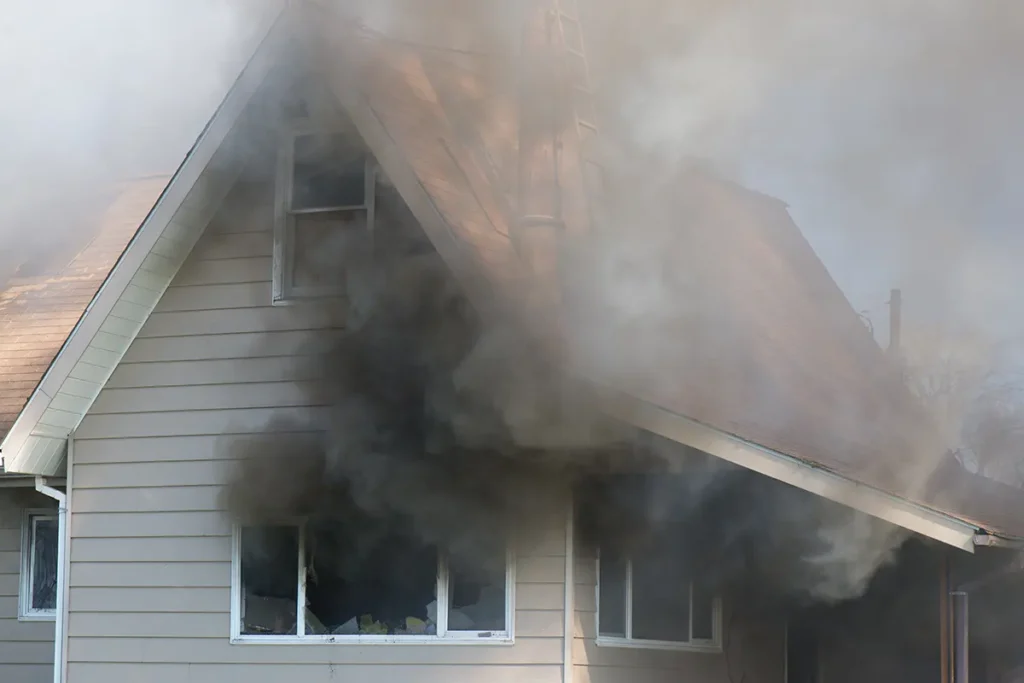
How well does concrete stand up to the high heat of a fire? This is key to understanding how safe buildings are in fire-prone areas. Does a fire weaken concrete, or does it have natural fire-resistant qualities? We’ll look at what the American Concrete Institute, the National Institute of Standards and Technology (NIST), and the Federal Emergency Management Agency (FEMA) say.
This will help us understand the effects of fire and smoke damage on concrete and its role in keeping buildings safe.
Key Takeaways
- Concrete shows a lot of fire resistance, making it a top choice for fire-safe buildings.
- Real-world cases and studies give us important info on concrete’s fire behavior.
- The American Concrete Institute has guidelines to keep concrete stable in fires.
- NIST studies show fires can impact but not greatly weaken concrete’s strength.
- FEMA suggests using concrete for rebuilding in areas prone to fires.
Understanding Concrete Fire Resistance
Concrete’s fire resistance is key, showing how well it holds up to high heat. ASTM International tests concrete to see how it handles extreme temperatures. These tests help us understand its fire resistance.
Fireproof concrete is made from cement, sand, gravel, and water. These ingredients help it act as a heat barrier. When the concrete cures, the cement creates a dense layer that slows down heat.
The International Code Council (ICC) sets building codes that highlight concrete’s fire rating importance. Following these codes helps builders make safe structures. It ensures buildings can withstand fire hazards.
Studies in the Journal of Structural Fire Engineering dive into concrete’s heat resistance. They found that concrete’s mix helps spread heat. This prevents quick temperature rises that can harm the material.
In simple terms, a higher fire rating in concrete means a building can better resist fire. This gives people more time to get out safely and reduces damage.
Does Concrete Get Damaged by Fire?
Concrete is known for being very strong. But, high temperatures can test even its strength. The fire resistance of concrete is key to its structure, when it faces extreme heat.
Concrete starts to lose its strength at about 572°F (300°C). The Institute of Civil Engineers says that at these temperatures, concrete can spall. This means the outer layers can flake off, leaving the inside vulnerable to more damage.
Studies show how fire affects concrete in different ways. For example, the Fire Safety Journal found that buildings can weaken a lot if they’re exposed to fire for a long time. This can lead to the concrete collapsing.
To make concrete more fire-resistant, we need to take steps. Adding polypropylene fibers and using fire-retardant coatings are two ways to do this. These methods are talked about in papers from the American Society of Civil Engineers. They help concrete perform better when it’s very hot.
Conclusion
In conclusion, this article has shown how well concrete can resist fire. It uses sources like the National Fire Protection Association and expert opinions. It’s clear that concrete is very good at limiting damage in fires.
Concrete is strong and can handle high temperatures well. This makes it safe for buildings in fire-prone areas. Experts say concrete keeps buildings safe and strong even when it’s very hot.
Using concrete in buildings makes them safer. It helps prevent fires and keeps structures strong. This makes cities safer and gives people peace of mind.
Need expert water removal and mitigation services? We got you covered.
Contact Protech Restoration today in the Chicago area for emergency water damage restoration services!